Parents write to us with a version of the same sentence: I want my child to love this place the way I do. This is how we try to make that happen.
Nobody writes asking for a tour of India. They write asking for something harder: that their daughter, or their son, should come to feel that this country belongs to them too.
It is one of the few requests in travel that is not really about travel. The itinerary is the instrument. The thing being attempted is a relationship — between a child who has grown up somewhere else and a country that is theirs by descent and not yet by experience.
That relationship has a window. It is widest somewhere between the ages of six and sixteen, when a child is old enough to remember and young enough to still go where the family goes. After that they have their own summers, their own friendships, their own idea of where they would rather be. Not impossible later. Just harder, and on their terms rather than yours.
Which is why the honest advice is almost always the same: sooner. A shorter trip at nine is worth more than a perfect one at seventeen.
They fall in love with a kitchen. With a cousin who is funny. With a street at six in the morning before the heat arrives. With a dog outside a temple, a particular sweet, the sound of a train at night, being allowed to stay up because everyone else is.
None of that is on an itinerary. All of it is downstream of one: of how long you stayed in one place, of whether there was an afternoon with nothing in it, of whether the people they met were performing hospitality or simply getting on with their day while a child watched.
So we plan backwards from the specifics. Fewer cities. Longer in each. At least one house that is not a hotel. Time with people rather than time in front of monuments — the monuments are wonderful and they will remember perhaps two of them, which is two more than they will remember of the fourth fort in nine days.

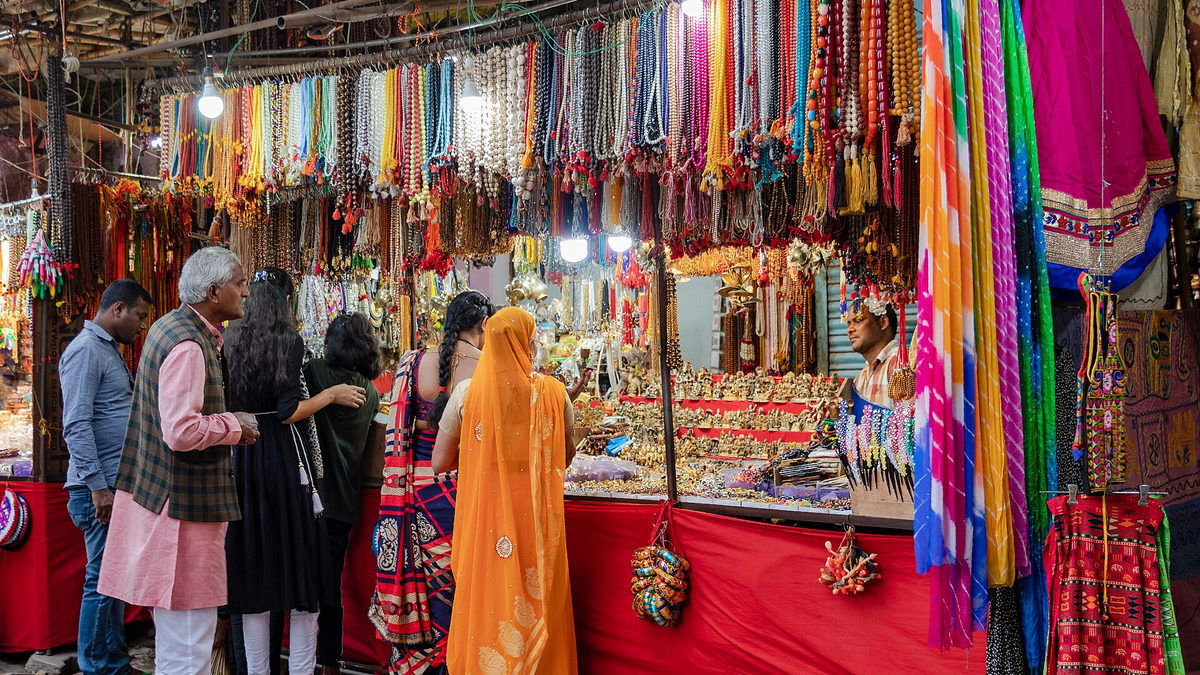
A bazaar stall, Pushkar
Most families try to do all four in ten days and manage none of them properly. They work better in sequence, across more than one visit — and the sequence matters more than the budget.
The first visit earns the rest. It should be short, comfortable and unmistakably wonderful — the version of India that makes a child want to come back, not the version that tests them.
The second changes shape. A base rather than a route. A neighbourhood they start to recognise. The shopkeeper who knows them by the third day. This is where belonging begins.
A festival, a wedding, a river at dawn — something with a crowd in it and a reason behind it. Not explained to them from a car window. Stood inside, with family, for as long as it takes.
The most reliable of the four, and the most underrated. Children who learn to cook two dishes with a grandmother carry India in their hands for the rest of their lives.
The things that survive the flight home are small. A smell. A word used wrongly and corrected, laughing. The way someone’s grandmother held their face.
What children keepWe have watched both. It costs nothing to say which is which.

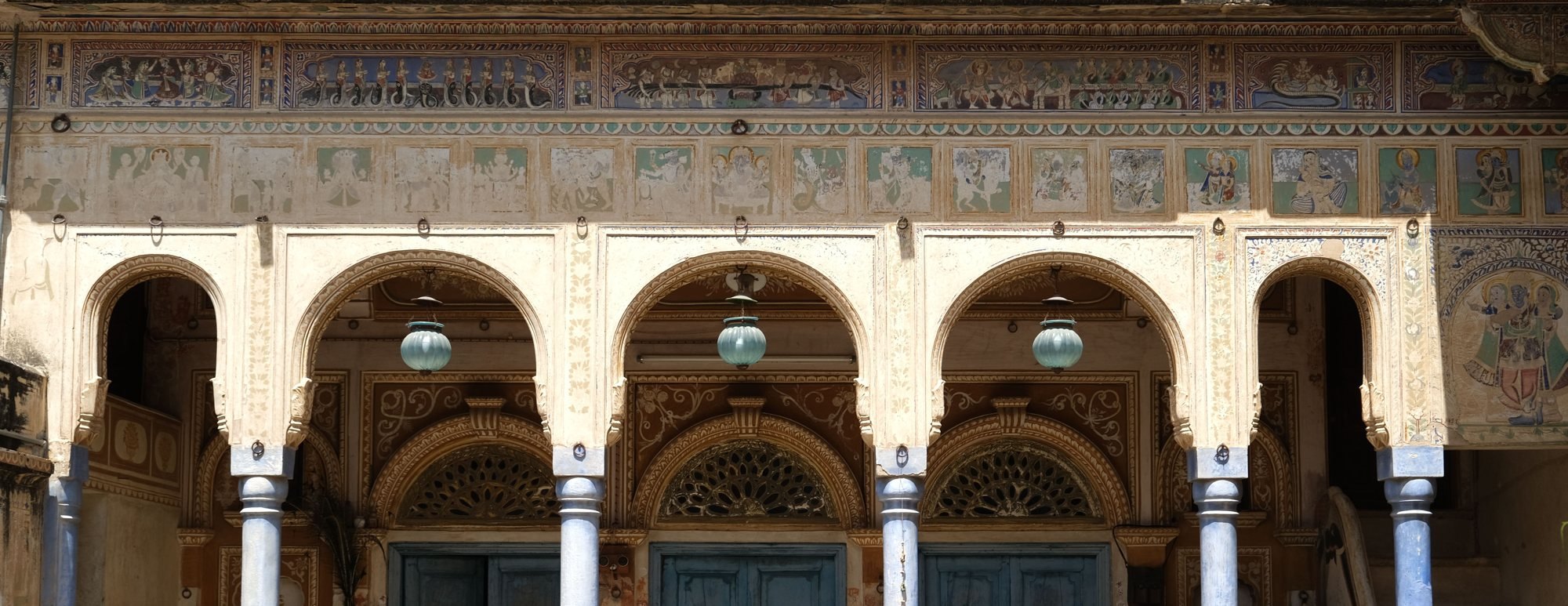
A haveli courtyard, Shekhawati
One worry comes up more than any other, usually late in a conversation and half-apologetically: will they be seen as outsiders? The accent is wrong. The language is thin or gone. They do not know how to behave in a temple.
In our experience, no. A child who arrives curious is met with something closer to delight. The wrong accent is charming. The missing language is a project everyone enjoys. Nobody is keeping score, least of all the people who will feed them.
What India does ask is time. It does not open to a schedule, and it does not reward the fortnight that treats it as a list. Give it a fortnight that treats it as a place and it is generous past the point of reason.
Always keep touch with your roots — and in any case, India will meet them with an open heart and open arms.
Why this page existsEvery journey is composed for the family in front of us. These are the questions we start from, and they are not the usual ones.
A seven-year-old and a fifteen-year-old want different countries. Pace, altitude, drive times, how much heat, how much walking, how much choice they get over the day — all of it moves with the age of the youngest.
There is the India your parents left, the India you remember, and the India that exists now. A good trip visits all three without pretending they are the same. Often the ancestral town matters more than the famous city.
If there are relatives, they are the centre of the trip and we plan around them rather than over them. If there are none left, we build the equivalent — households, workshops, kitchens where a child is welcome for an afternoon.
We plan the first with the second already in mind, and we will say so. Something is deliberately left undone, because a reason to return is worth more than a complete first trip.
Three generations travelling together is its own discipline: two paces, two bedtimes, two tolerances for heat. It is the most rewarding version of this and the easiest to get wrong.
Elevated India composes the journey and runs it on the ground. The people who plan it are the people responsible when a child is unwell at eleven at night in a town you have never been to. Nothing is handed to a third party.
Not your dates, not your budget — those come later and they are the easy part. Start with their ages, how much India they have had so far, and what you would like them to come home with. Our first piece of work is a written view of what is realistic for their age, before anything is planned or quoted.